Estate Cleanouts in Macomb County: A Practical, Compassionate Guide

Clearing out a home after a loved one has passed, or when an aging family member moves into care, is one of the hardest jobs most people ever take on. It's not just physical work — it's emotional, it's often shared among family members with different feelings about it, and it usually lands during a season of grief. There's no way to make it easy. But there is a way to make it manageable, and a steady plan takes an enormous weight off.
We've supported many families through estate cleanouts across Warren, Clinton Township, Mount Clemens, and the rest of Macomb County. This guide shares what we've seen work — practically and emotionally — so you can move through it at a pace that respects both the task and yourself.
Give yourself permission to go slow — then set a plan
The two most common mistakes are opposite extremes: rushing the whole house in a frantic weekend, or freezing entirely because it feels too big. Neither serves you. The middle path is a plan with room to breathe. Decide on a realistic timeline — a few weekends, not a few hours — and break the house into zones. One room, or even one closet, at a time.
If the estate involves probate or a will, coordinate with family and any attorney before disposing of anything significant. Sentimental and valuable items especially should be identified and set aside first, before the sorting begins in earnest.
The four-category sort
Almost every estate cleanout comes down to sorting the contents into four buckets. Working room by room, place each item into one of these:
- Keep. Items family members want, valuables, documents, photos, and anything of genuine sentimental or financial worth.
- Sell. Furniture, collectibles, jewelry, and quality goods worth an estate sale, consignment, or online listing.
- Donate. Usable clothing, housewares, furniture, and books that a charity can put to work.
- Dispose. Broken, worn, soiled, or unwanted items with no resale or donation value — the bulk of most cleanouts.
Handle documents with care
Before anything is hauled away, check every drawer, folder, and box for important papers — wills, deeds, titles, financial records, insurance policies, and family documents. These hide in unexpected places, and once they're gone, they're gone.
Find the treasures before you toss
Estates hide meaningful things in ordinary places: cash tucked in books, jewelry in coat pockets, savings bonds in a dresser, old photographs in the backs of closets. Before any room is cleared, go through it methodically. It's slow, but it's the part you can't undo, and families are almost always glad they took the time.
Donate and sell what you can
A great deal of what fills an estate is still useful to someone else, and passing it on can bring a small measure of comfort. Macomb County has strong options: local Habitat for Humanity ReStores take furniture and building materials, and organizations like Goodwill and the Salvation Army accept usable household goods, many with pickup for larger items. For items of value, an estate sale company can handle the sale of an entire household at once — often the least stressful route for a large estate.
Then bring in the dumpster
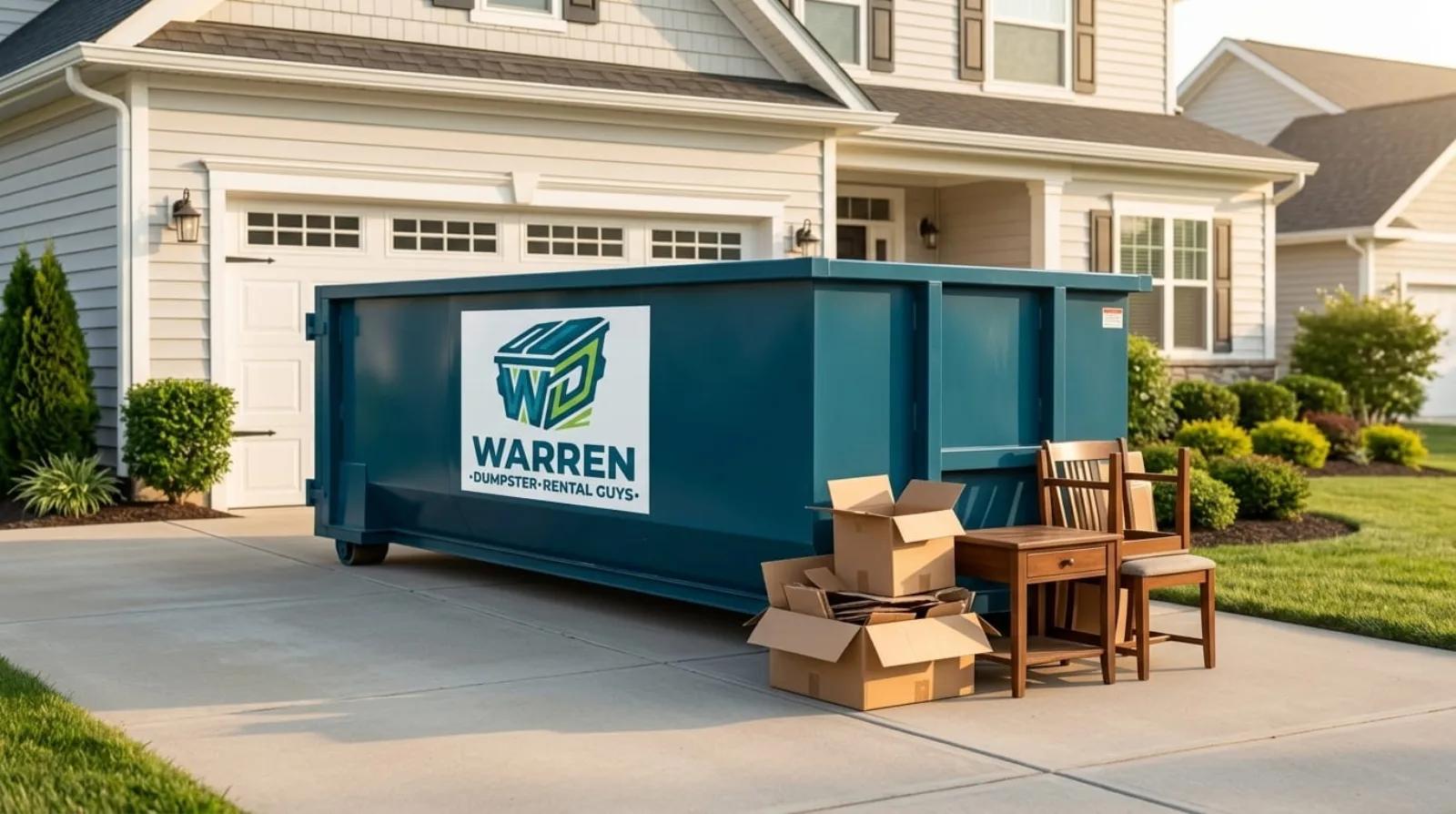
Once you've pulled the keep, sell, and donate items, what remains is disposal — and in a full-house cleanout, that's a lot. This is where a roll-off dumpster changes everything. Instead of endless trips to the curb and the transfer station, you have one container on the driveway to load at your own pace over the rental window.
For a full-house estate cleanout, a 30 yard dumpster is usually the right call — it holds the contents of an entire home, from old furniture to the accumulated contents of a basement and attic, in a single haul. For a smaller apartment or a partial cleanout, a 20 yard may be plenty. Our cleanout dumpster service is built for exactly this kind of job, and we'll help you size it when you call.
Know what can't go in the bin
Estates often contain items that need special disposal — old paint in the basement, a fridge or freezer, electronics, or chemicals in the garage. These can't go in the dumpster; our guide to what can and can't go in a dumpster covers the full list and where each item should go instead. Setting these aside as you sort keeps your load clean and avoids a rejected haul.
Share the load
You don't have to do this alone, and you shouldn't. Rally family members, split the rooms, and take breaks. If the estate is large or the emotional weight is heavy, there's no shame in bringing in help — estate sale professionals, cleanout services, or simply friends willing to carry boxes. The goal is to get through it intact, not to prove you can do it single-handedly.
Be kind to yourself
Finally, remember that this work is grief in physical form. Some days you'll clear a whole room; other days a single box of photographs will stop you cold, and that's okay. Let the emotion come. Step away when you need to. The house will still be there tomorrow. What matters is that you honor the person and the life those belongings represent — and that you come out the other side whole.
When you're ready for the disposal side, we're here to make at least that part simple. Call (586) 438-3164 and we'll bring the right container to your driveway, on your schedule, with the patience this kind of job deserves. Serving families across Warren and all of Macomb County.
This article touches on a difficult and sensitive subject. If you're navigating loss, please lean on the people and resources around you — you don't have to carry it alone.