Roofing Tear-Off Dumpsters: How to Size and Load Them Right
Of all the projects that fill a dumpster, roofing is the one that most often surprises people — and not in a good way. A roof tear-off produces a debris type unlike almost anything else: dense, heavy, and deceptively compact. Homeowners and even some contractors size a roofing bin by volume, load it up, and get hit with a weight overage because shingles are far heavier than they look. Getting this right is entirely a matter of understanding weight, and it's not complicated once you do.
Whether you're a homeowner tackling a garage roof or a contractor running tear-offs across Warren and Macomb County, here's how to size, load, and manage a roofing dumpster so weight never bites you.
Why shingles are the tricky part
Asphalt shingles are made to shed water and take decades of weather, which means they're dense and heavy. A single "square" of roofing — a 10-by-10-foot section, or 100 square feet — weighs a few hundred pounds in tear-off debris, and more if there are multiple layers. Multiply that across an entire roof and the tonnage climbs fast.
The upshot is that roofing hits a dumpster's weight limit long before it fills the volume. A bin that looks a third full can already be at its tonnage cap. This is the exact opposite of a furniture or general-junk load, where you run out of space long before weight matters. Treat roofing like light junk and you'll overshoot the limit every time.
The core rule
For roofing, think weight first, volume second. A smaller bin loaded within its tonnage allowance almost always beats a big one you can't legally haul.
Sizing by roof squares and layers
The best way to size a roofing dumpster is by the roof's area in squares and the number of existing layers. Here's a practical starting framework — and one we'll refine for your specific roof when you call:
| Roof size | Layers | Typical bin |
|---|---|---|
| Up to ~15 squares | 1 layer | 10 yard |
| 15–25 squares | 1 layer | 15 yard |
| 25–35 squares | 1 layer | 20 yard (within weight limit) |
| Any size | 2+ layers | Size down or plan a swap — double the weight |
Layers are the multiplier people forget. A second or third layer of old shingles doubles or triples the weight without changing the roof's footprint. If you're tearing off multiple layers, the safe move is a smaller bin with a swap-out, or a container specifically sized for the total tonnage. When you call, tell us the roof's approximate square footage and how many layers are up there — that's all we need to size it correctly.
Our recommendation for most homes
For a typical single-family home roof in Warren, Eastpointe, or Roseville, a 15 yard dumpster is the workhorse — low enough to load shingles into easily, sized so a standard single-layer tear-off stays within weight. Bigger roofs or multiple layers move up from there, always with the weight cap as the guide rather than the volume.
Loading a roofing dumpster the right way
How you load matters for both safety and capacity:
- Distribute the weight evenly. Don't pile all the shingles at one end. An unbalanced load is harder and less safe to haul.
- Load low and level. Because you'll likely hit weight before the bin fills, you often won't need the full height — keep it spread and level.
- Toss, don't dump from height. Sliding shingles down a chute or tarp into the bin beats heaving bundles that can bounce out.
- Keep the debris in the bin. Stray shingles and nails around the container are a hazard and a cleanup headache. A ground tarp catches strays and makes the final sweep easy.
- Don't overfill. Debris must stay level with the top rail to be legally hauled — no heaping.
Placement and access for roofing jobs
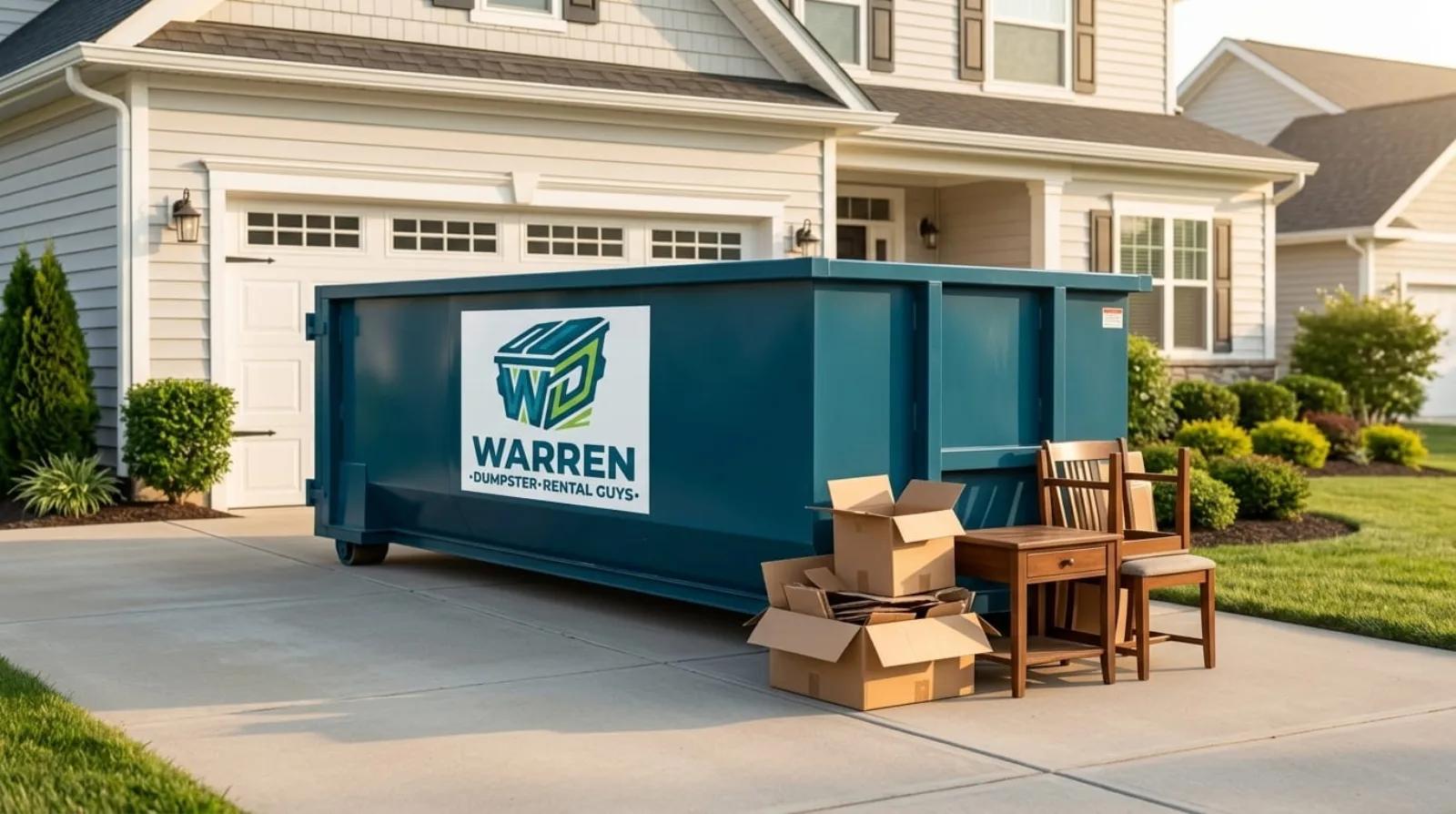
Position the dumpster close to the tear-off zone so debris has a short trip from roof to bin — ideally right beside the section you're stripping. On tighter lots in Center Line or Hazel Park, plan placement in advance so the bin sits where it's useful without blocking the driveway or the neighbor. And protect your driveway: ask for boards under the rails, especially since a roofing bin carries concentrated weight.
Watch the nails
Every roofing job sheds nails, and they end up on the driveway, in the grass, and near the bin. Beyond being a tire and foot hazard, stray nails are the most common complaint after a tear-off. Lay tarps to catch debris, sweep thoroughly, and run a magnetic nail sweeper over the driveway and lawn when you're done. It's a small step that prevents a flat tire or an injury weeks later.
For contractors: keep the crew moving
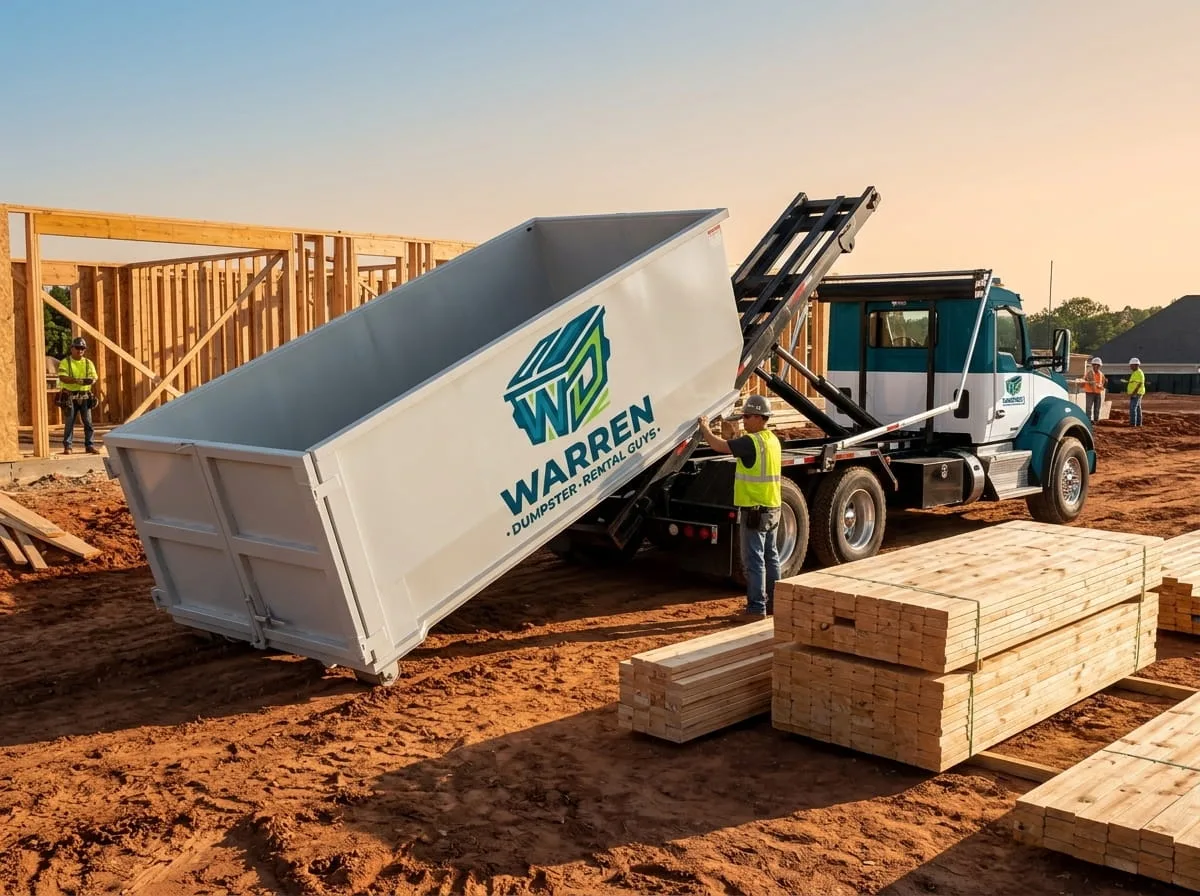
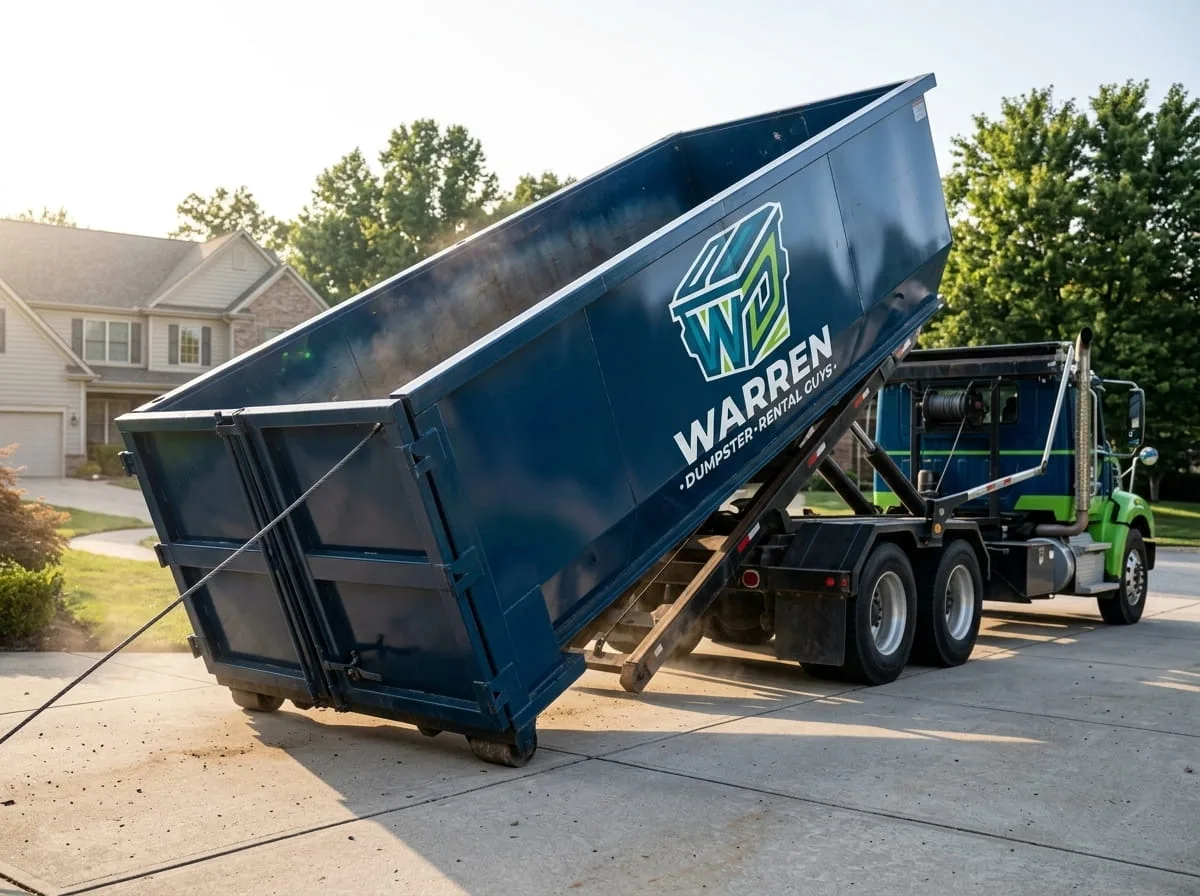
If you're a roofing contractor, downtime waiting on a full bin is money lost. We coordinate swap-outs so your crew keeps stripping while we exchange containers, and we can stage the right size for the roof so you're not guessing on weight. Consistent, on-time roll-off service is part of what keeps a tear-off on schedule, and it's the kind of reliable partnership we build with the trades across the area. Our construction dumpster service is set up for exactly this.
The takeaway
Roofing debris is all about weight. Size by squares and layers, lean toward a smaller bin loaded within its tonnage cap, load level and balanced, and sweep every last nail. Do that and a tear-off is a clean, predictable job with no overage surprises. Get it wrong, and weight fees turn a simple project into an expensive lesson.
Planning a tear-off? Call (586) 438-3164 with your roof's size and layer count, and we'll size the bin right and quote it flat. Serving roofers and homeowners across Warren and the surrounding communities.